
There are many reasons that can lead to amputation. Yet for most people, one question often remains: “Why me?”
In the early stages of amputation, it might seem like a race to push past your physical limitations. It is important to remember that the mind and body work as one and nurturing your mind can help overcome both mental and physical barriers.
-What you are experiencing is normal –
Emotional recovery after amputation is different for everyone. In the beginning you might experience stages like grief such as;
- Shock and Anxiety: Initially, disbelief and worry about the future (e.g., independence, body image) are common.
- Anger and Grief: Frustration or sadness over lost abilities and lifestyle may surface as you process the change.
- Depression and Trauma: Deeper sadness or PTSD symptoms (e.g., flashbacks) can occur, especially if the amputation was sudden.
- Acceptance: Over time, many adapt, focusing on new strengths, though emotional ups and downs may persist.
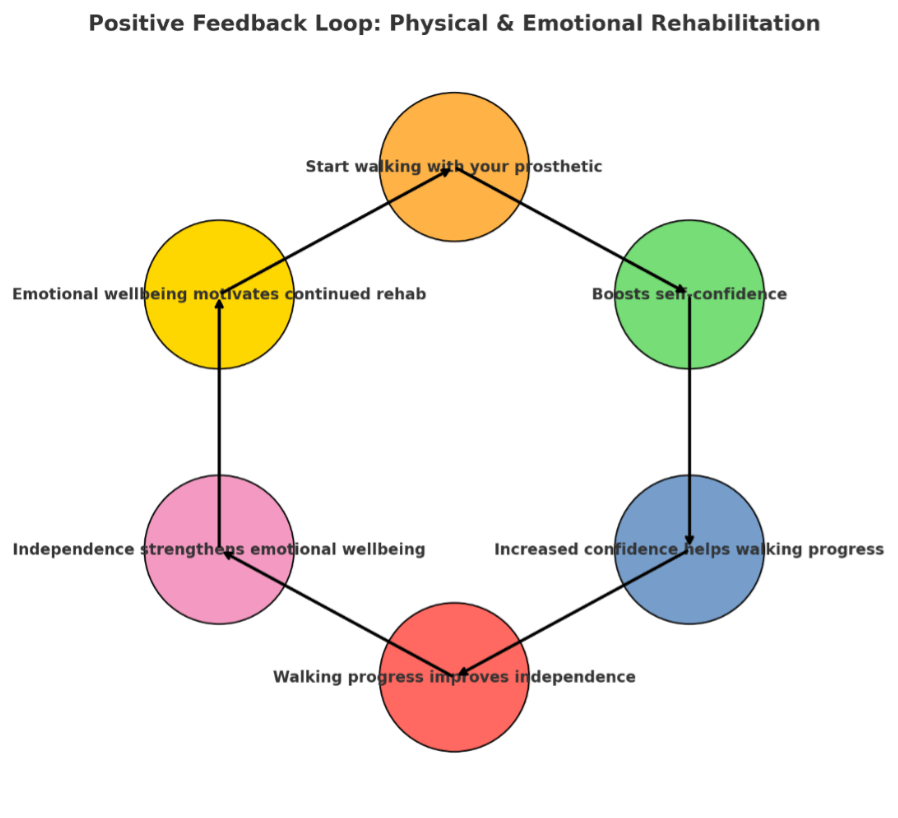
The Positive feedback Loop
As you work on your physical milestones, like improving your range of motion or walking longer distances, you develop a greater sense of achievement. In the same way gaining emotional resilience can become motivation to continue with physical goals.
This positive feedback loop can help you adapt to your new reality by boosting your overall confidence and sense of self achievement.
Steps To “C” yourself succeed
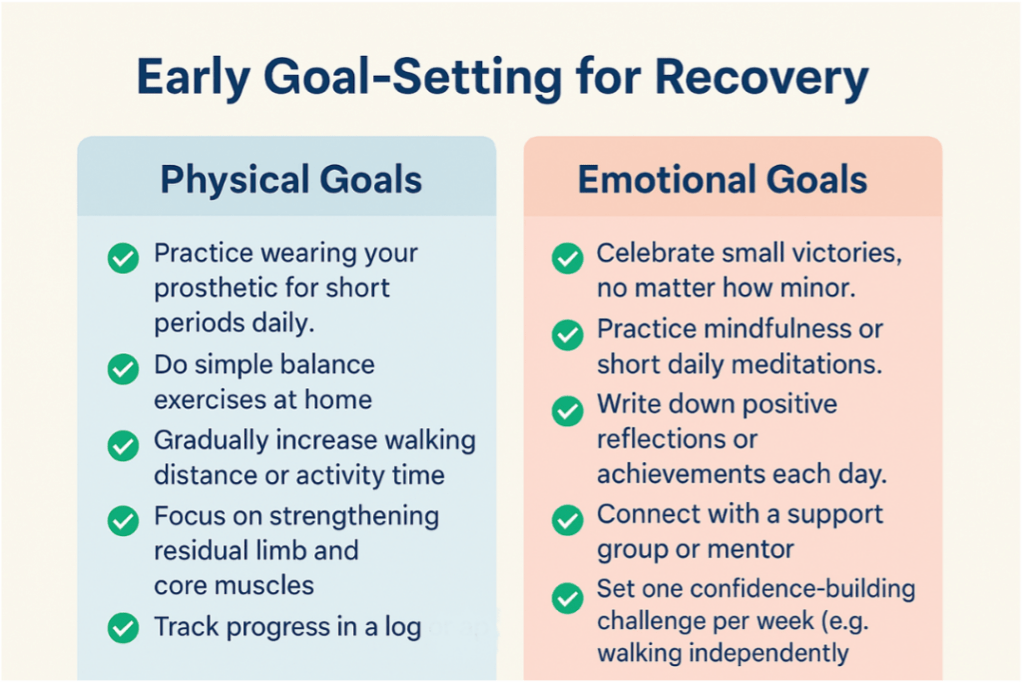
- Consistency -Recovery is not about one big breakthrough. It is made up of steady progress. Setting simultaneous goals for your physical and mental health keeps you moving forward on both fronts. Here are some ideas of goals that you can include in your journey.
- Community – Community is an important part of your rehabilitation journey; this includes your rehabilitation team. They can provide guidance, celebrate your progress, and give you a sense of security and confidence that you are not facing this journey alone.
Support and info Groups to check out:
- Amputee Hub South Africa (Facebook group)
- The Amped Life on Instagram and YouTube.
- Participating in Össur Mobility Clinics: These clinics offer an interactive platform for amputees to connect with others, receive training from experts, and improve mobility with their prosthetics.
Life after amputation is undeniably challenging, but it also offers an opportunity for profound growth and resilience. Healing begins not only with physical rehabilitation but with emotional acceptance and mental strength. By acknowledging your feelings, celebrating small victories, and leaning into the support of your community, you can begin to reclaim your independence and confidence. Remember, progress doesn’t happen overnight—it’s built on consistency, courage, and connection. The path forward may look different, but with time and support, you can still move toward a fulfilling and empowered life.
 Du Toit Orthotics & Prosthetics