

The prosthetic socket is one of the most important aspects to any prosthesis, whether it is an above-knee, below-knee or even an upper limb device. The socket serves as the interface between your residual limb (stump) and the rest of the prosthesis, which is why obtaining the best possible fit is necessary for comfort, optimal gait and function, and minimizing complications/setbacks. To achieve this your prosthetist may opt to fit a test socket before finalizing your definitive (final) socket.
But what is a “Test Socket”?
Test Sockets
A Test Socket, more formally known as a “Diagnostic Socket”, is a clear, plastic socket that is used temporarily to ensure a good socket fit. These sockets are made from a thermoplastic material such as PETG (Polyethylene Terephthalate). In Layman’s terms, it is made from a plastic material that softens when heated and hardens as it cools. During the fabrication process, the material remains transparent, even upon cooling which is very important during the socket fitting.
Manufacturing
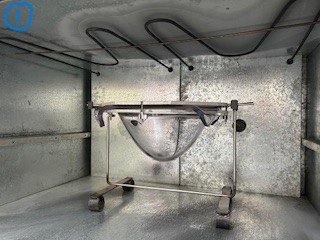
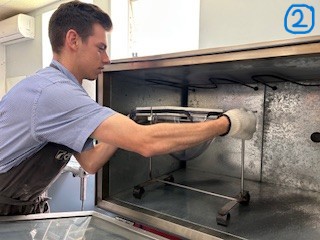
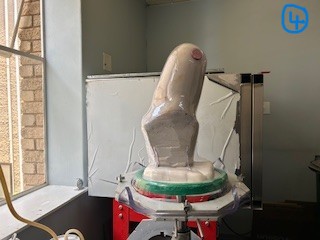
To manufacture the socket, the material is placed inside an apparatus that suspends the plastic inside of an oven. As the plastic is heated, it begins to sag and droop. At the correct length, the plastic is taken out of the oven and draped over the positive cast of the residual limb. Once the plastic has been draped over the cast, vacuum is applied to the system so that the soft plastic can conform to the cast contours and once cooled, holds this shape.

Properties
The transparent property of the plastic allows your prosthetist to see exactly what is happening inside the socket; they will be able to see potential areas of concern such as gapping within the socket or maybe excessive pressures in areas that cannot tolerate it like your bones.
The thermoplastic property allows the socket to be modified even after it has been manufactured by heating areas of discomfort with a heat gun and manipulating the area by hand (using a glove) to create a more comfortable socket contour.
The plastic inherently has certain advantageous properties such as: hardness, chemical and impact resistance, and ductility, which make it the perfect fit for a temporary prosthetic socket.
The Test Socket can either be filled with Plaster-of-Paris, or any adjustments made to the Test Socket can be carried over to the original positive cast of the residual limb before fabricating the Definitive socket.
Definitive Sockets
The “Definitive Socket” is what we would call your “Final Socket”. It is the socket that is used on your prosthesis permanently until the socket fit is no longer adequate due to volume loss in the residual limb. The design of this socket is somewhat similar to the Test Socket, however, if the Test Socket was adjusted, those adjustments are evident on the Definitive Socket the first-time round.
Manufacturing
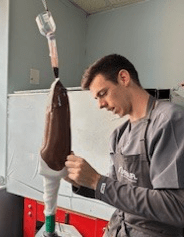
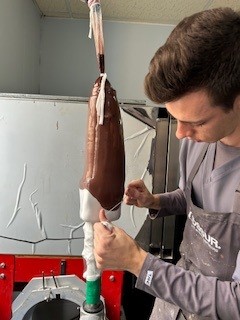
Fabrication between the two sockets does differ, instead of drape molding plastic over the positive cast to obtain the Test Socket, the Definitive Socket uses thermosetting resins that harden when heated. These resins “cure” when exposed to heat or a catalyst and produce an irreversible, strong, rigid socket. Along with the resin, various lay-up materials are used to improve and build-upon the characteristics and properties of the resin, for example, Carbon Fibre is used to increase strength and rigidity while Perlon is used to add a smooth finish and wear resistance to the socket.
Due to the resin and lay-up materials, the definitive socket is not transparent like its Test Socket counterpart, but rather opaque. These sockets can be customized to your liking regarding colour, patterns and appearance.
So while the process of fabricating two separate sockets for you may seem tedious and unnecessary, it is anything but. Your Test Socket allows your prosthetist to bend the socket to your will, both literally and figuratively, so that you have the best socket that works for you and not the other way round. Your test socket gives you the best chance for greater comfort, gait and functional outcomes with minimal setbacks, so that when you receive your brand-new definitive socket, you can put it through its paces and be confident that your socket and your residual limb will be able to handle your lifestyle!
 Du Toit Orthotics & Prosthetics