
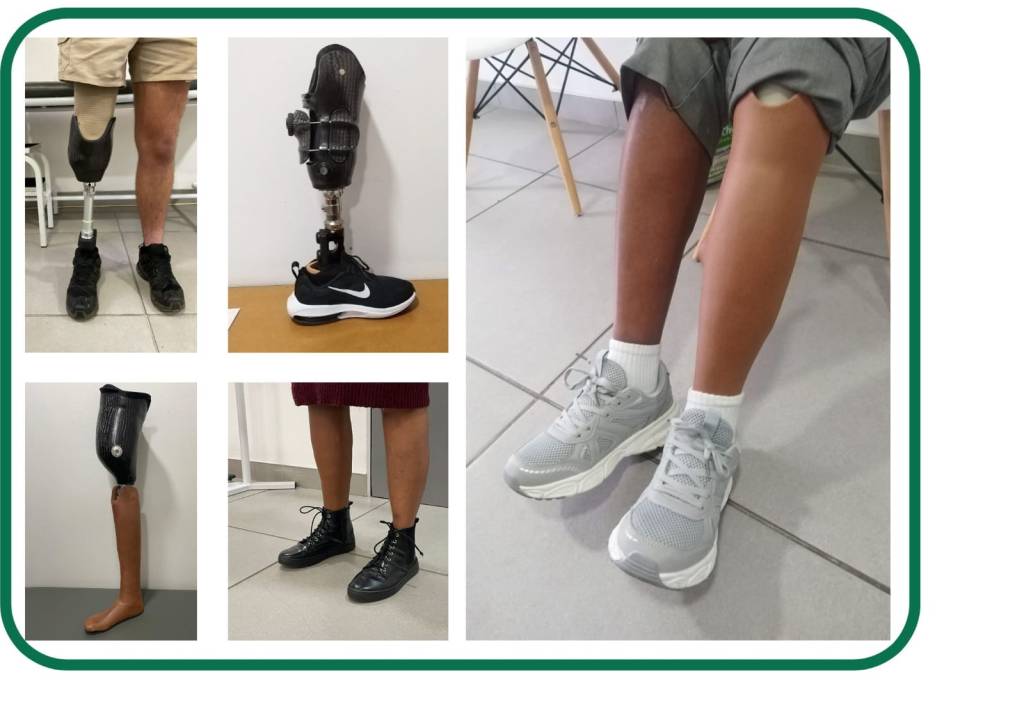
Prosthetic covers provide patients with the opportunity to “humanize” their prosthesis. These covers can be used for a variety of lower limb prostheses, including below-knee and above-knee devices. Some prosthetic users see the prosthetic cover as an absolute necessity, while others would rather have their pylon do the talking. But why? Let’s take a look at why some prefer the look and feel of a Prosthetic Cover and why others prefer the minimalistic approach of their prosthetic pylon.
What is a Prosthetic Cover?
Before looking at the “Why,” we need to first look at the “What”. A Prosthetic Cover (more officially known as a Prosthetic pylon cover) is an optional cosmetic covering that goes over the prosthetic pylon; the vertical support that connects the prosthetic socket to the componentry below. These covers are most often made from a foam material; this foam either comes in a pre-shaped form or in a rectangular form, with a hole in the middle to accommodate the pylon. The foam is cut, shaped, and contoured to match your other leg as closely as possible.
Thereafter, the prosthesis and foam cover can be covered with a cosmetic stocking or even your best-looking sock, which creates a more natural, familiar silhouette. Or we can take it one step further and spray the foam material and the rest of the prosthesis with Superskin, a synthetic coating that is used to more closely resemble your skin tone. Think of a car being sprayed at the panelbeaters, your prosthesis is primed and then coated with Superskin, allowing the prosthesis to match your own personal paintwork. Alternatively, DAWSkin may tickle your fancy with a more lifelike appearance and multiple skintone options. DAWSkin is simply pulled over the prosthesis and its cover to create a more realistic-looking limb.
Why/Why not have a Prosthetic Cover?
Prosthetic covers are entirely optional; the only factor influencing whether your prosthetic device has a cover or not is you and your preference. Many patients are “Pro-Cover” while many others are “Pro-Pylon”. Many variables influence patients’ preferences, so this is where we answer the “Why”.
Pro-Cover
Aesthetic Appearance
The first reason that may come to mind is the fact that many patients want their prosthetic device to look like their anatomical leg, potentially to regain what was lost. A prosthetic pylon looks unnatural, whereas a foam cover resembling the opposite leg will look and feel more familiar to both the patient as well as onlookers.
Psychological Comfort
Amputations and using a prosthesis are well-documented to have a great impact on a patient’s perception of their body image and self-esteem. Having a prosthetic cover may provide the user with peace of mind knowing that they somewhat look as they did before. This can help initially with life after limb loss and can help sustain positive attitudes towards their body image and self-esteem throughout their prosthetic journey.
Clothing Fit
Everybody enjoys that pair of jeans that fits just right. A prosthetic cover allows the patient to continue looking and feeling good by preventing the clothes from hanging strangely, but rather taking up the space inside the pant leg as would an anatomical leg. As the Cape Town winds blow, patients will remain confident knowing that their prosthesis will help keep a natural silhouette as they strut their stuff.
Protection
A reason that may not cross your mind at first, a prosthetic cover will help protect the underlying componentry of your prosthesis. The cover will prevent scratches, dings, and damage from occurring to the prosthetic pylon and other componentry, keeping your Prosthetist and Medical aid happy. Unfortunately, this means that the cover will take the brunt of the damage.
Social Perception
This goes hand-in-hand with most of the reasons above. Some patients prefer to blend, and their prosthetic cover will help achieve that. At a glance, many people may not notice that the limb they are looking at is artificial, avoiding any unwanted stares, questions, and attention that comes with wearing a prosthetic.
Pro-Pylon
Functionality and Performance
Active patients may find a cover a hindrance to their activities and hobbies. These patients may view a cover more as a liability than an improvement. Patients involved in sport or high-performance training may find the additional weight compromising. Although the cover does not add a significant amount of weight, in sports where every second counts and every advantage is necessary, a prosthetic cover won’t be opted for.
Pride and Identity
In complete contrast to before, rather than blending in, some amputees would like to stand out more than they already do. Patients can express their newfound identity using their prosthesis; after all, a prosthesis is unique to you and only you. While others may want to cover their prosthesis, others embrace their bionic look and prefer to show it off in all of its artificial glory! In a world where personal identity is being encouraged, some patients find pride in being unique and different, and so they would like to show that off.
Cost and Maintenance
Of course, with any optional extra comes additional cost. Prosthetic covers are Reimbursor-dependent, meaning that if it is not covered by the Medical plan you are on, it will be member liable. Some patients feel that they would be better off without a cover due to the associated costs. Like most things, these covers won’t last forever and will need to be replaced from time to time if they become damaged and worn out, so some patients feel it isn’t worth the hassle.
Customization
Some patients choose to express themselves by having custom designs and other accessories incorporated into their prosthetic design. This customisation can, in itself, improve self-esteem and acceptance as the prosthesis begins to reflect the patient’s personality and inner self as opposed to their situation. Because of this, some patients feel it would be a crime to cover their prosthesis up as if it means they cover their actual self.
Conclusion
Prosthetic covers are entirely personal; whether you choose to cover it up or let it shine, your choice is the only correct decision you can make. Neither is better than the other. Your choice, your preference, your prosthesis! That is what it is all about, so if you prefer to have a prosthesis with “calves” bigger than those at Hyrox, or want to stand out by looking like Robocop, your prosthesis should fit your stump as well as your personality.
 Du Toit Orthotics & Prosthetics