
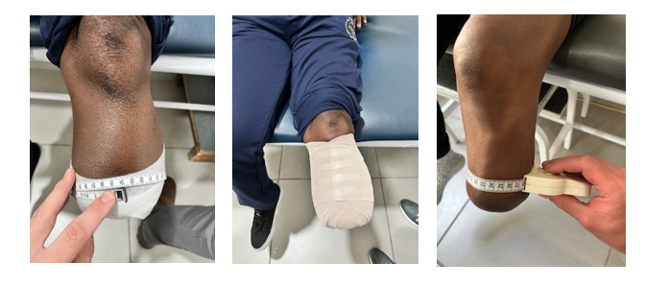
After an amputation it is normal to notice changes in the size and shape of your stump, this is referred to as Volume fluctuation. This is part of the body’s normal healing response; however, it is important to manage this volume to prepare your stump for prosthetic use.
Why is it important to control this volume and how it can be done post-amputation?
Let’s talk about COMPRESSION!
An important concept to remember during the early stages after your amputation is compression therapy.
Compression therapy works by applying graduated pressure to the stump, this means that more pressure is applied to the bottom of the stump compared to the top. This will help reduce the swelling/volume in the stump by pushing excess fluid out of the stump so it can be reabsorbed by the body.
By reducing the swelling, blood circulation is improved in the area of amputation. This ultimately allows for faster healing and pre-prosthetic shaping.
Compression coning bandages:
A coning bandage is a special type of compression bandage that applies graduated pressure. It is applied using the Figure of 8 Technique which creates a secure pattern around the stump to prevent the bandage from slipping and ensure that circulation is not restricted. This helps limit movement which can reduce pain, swelling and at the amputation site.

When it comes to preparing for your prosthesis, coning bandages help create a more conically stable shape. The conical shape helps distributes pressure evenly, which is vital for comfort and proper weight-bearing when using a prosthesis.
Alternative methods:
| Advantages | Disadvantages | |
| Elastic shrinker socks | Easy to put on. | Dependent on stump size and second smaller one might be needed. |
| Rigid removable dressing (RRDs) | Protects the stump from any injuries. | Bulky and less adjustable. |
How long should compression garments be used for?
Daily wear: Usually recommended a minimum of 12 hours per day or depending on patient tolerance, removing only for bathing, skin checks, and wound care.
Post-Amputation: Compression is often started once stitches are removed and the skin can tolerate pressure. This is approximately 10–14 days after surgery (this timeline may vary depending on the patient and primary surgeon that performed the amputation)
After the limb size and shape have stabilized enough for a prosthetic socket to be fitted, compression is maintained using a prosthetic liner. This will be worn every day in conjunction with the prosthesis.
Conclusion
Controlling the volume in the residual limb plays an important role in your post amputation rehabilitation. Not only can this prepare you for your future prosthesis but it also contributes greatly to the overall health and wellbeing of the stump.
 Du Toit Orthotics & Prosthetics